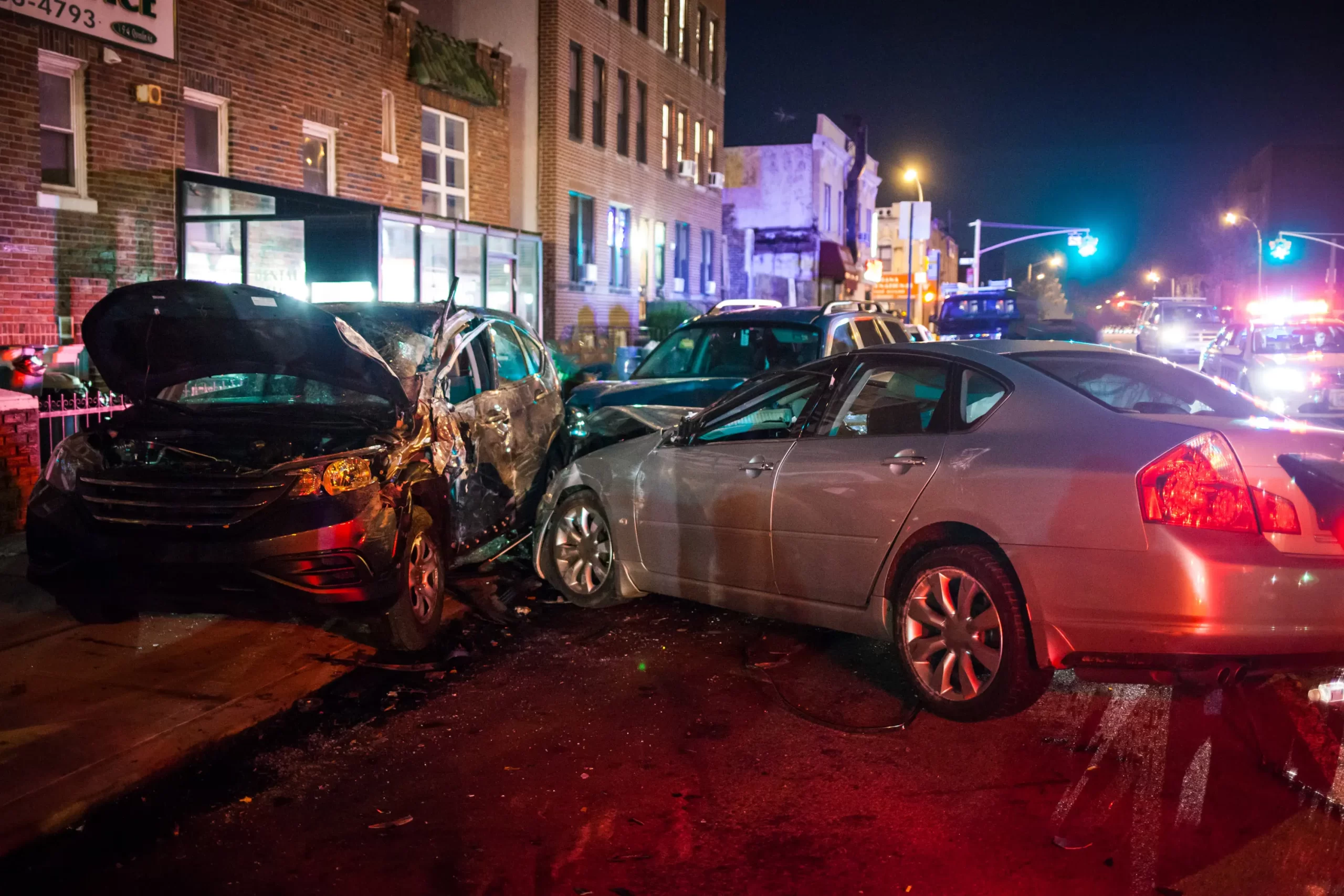
When a car crash occurs, determining who is at fault is paramount to resolving the situation fairly. However, attributing fault is not always a straightforward process. In instances where both drivers share responsibility for the crash, understanding Colorado’s comparative fault law becomes essential. In this blog, we, at Hoffman Law Firm PC, will walk you through Colorado’s comparative fault law and how it can affect your car crash case in Colorado.
Key Takeaways
- In Colorado, car crash cases where both drivers are at fault are handled under a modified comparative negligence system.
- Each driver can still recover compensation as long as they are found to be less than 50% responsible for the accident.
- Any compensation awarded is reduced in proportion to each party’s percentage of fault.
- Insurance companies and courts evaluate evidence such as police reports, witness statements, and crash reconstruction to assign fault percentages.
- Disputes over fault are common in shared liability cases and often require detailed investigation and legal argument.
- Even if you are partially at fault, you may still be entitled to recover damages for medical bills, lost wages, and other losses.
- Strong documentation and legal representation can help ensure fault is accurately assessed and not unfairly shifted onto one party.
- An experienced Colorado personal injury attorney can help protect your rights and maximize your recovery in comparative fault cases.
Colorado’s Comparative Fault Law
Colorado adopts the principle of comparative fault, outlined in Colorado Revised Stattue § 13-21-111, which ensures a fair distribution of liability among parties involved in an accident. This law states that an injured party can still recover damages even if they are partially at fault, as long as their negligence does not exceed that of the defendant. Putting numbers to Colorado’s comparative fault law, this means that to recover damages from a car crash, one cannot be more than 49% at fault for the crash. In Colorado, if you are 50% or more at fault for the car crash, you cannot receive compensation from the other driver.
Breaking Down the Process
Once an accident has occurred here are some recommended actions to take:
- Investigation and Evidence Gathering: Once a crash occurs, an investigation ensues. Evidence, including photographs, witness statements, and police reports, is gathered to establish the actions and decisions of both drivers that led to the collision.
- Determining Fault Percentage: After a meticulous review of the evidence, the fault is apportioned between the parties based on their contribution to the accident. For example, if Driver A is found to be 30% at fault and Driver B 70%, the responsibility is shared accordingly.
- Calculation of Damages: Damages are then calculated, taking into account medical expenses, property damage, lost wages, and other relevant injuries. In our example, if the total damages amount to $10,000, Driver A would be liable for $3,000 and Driver B for $7,000, reflecting their respective fault percentages.
Impact on Compensation
The comparative fault law directly impacts the compensation an injured party may receive. If you are found to be 50% or more at fault for the accident, Colorado law prohibits you from recovering any compensation from the other party. However, if your fault is assessed below this threshold, you are entitled to compensation, albeit reduced by your degree of fault.
Legal Representation
Navigating the complexities of a car crash case where both drivers are at fault can be daunting. Having experienced legal counsel like Hoffman Law Firm PC by your side ensures that your rights are protected, and you receive the compensation you rightfully deserve. Hoffman Law Firm PC specializes in personal injury cases and is well-versed in Colorado’s comparative fault law, ensuring you receive personalized and effective legal representation.
Understanding Insurance Implications
Colorado’s comparative fault law also affects how insurance companies evaluate claims. Insurers will investigate the accident, assign fault percentages, and adjust claim payouts accordingly. Engaging with a knowledgeable attorney can help you navigate negotiations with insurance companies and secure fair compensation.
FAQs About Colorado’s Comparative Fault
- What is Comparative Fault? Comparative fault is a legal principle that apportions responsibility and damages based on the degree of fault of each party involved in an accident.
- Can I claim damages if I am partially at fault? Yes, in Colorado, you can claim damages as long as your degree of fault does not exceed 49%.
- How is the degree of fault determined? The degree of fault is determined through a thorough investigation, considering evidence such as witness statements, police reports, and photographs from the accident scene. In some cases, the parties may hire an expert(s) or accident reconstructionist to help determine fault.
- Why do I need a lawyer? A knowledgeable and experienced lawyer can help protect your rights, navigate complex legal processes, and negotiate with insurance companies to secure the compensation you deserve.
Colorado’s comparative fault law plays a pivotal role in determining compensation in car crash cases where both drivers are at fault. Understanding this law and seeking knowledgeable legal representation from firms like Hoffman Law Firm PC can significantly impact the outcome of your case. Remember, knowledge is power, and being informed about your rights and the legal landscape can make all the difference when seeking justice and compensation in the beautiful state of Colorado.